Posts

Showing posts with the label science fiction

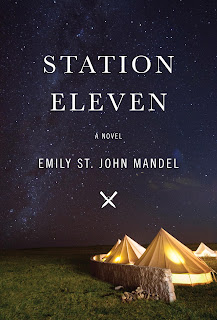
Station Eleven (the book): A Review of the Post-Apocalypse
Image
By Péter MARTON Having just finished Emily St. John Mandel's Station Eleven (the 2015 winner of the Arthur C. Clarke Award), a part post-apocalyptic, part pre-apocalyptic novel with (inevitably and yet mostly just implicitly) the apocalypse in its centre, here are a few quick notes, in praise as well as criticism – not as a literary review, but mainly in reaction to the plot: its plausibility and its implications. As a work of literature I really liked this book – I enjoyed it, even. It is moody and haunting, as many would say. All the characters want to be somewhere else, even some time else. The story is effectively a collection of their memories upon memories of times, places and faces past. What follows here, however, is the dirty work – the ugly analysis of probabilities and plausibilities that's more interesting from a social science vantage point. A raw take from my part. Feel free (or invited, even) to add to this, or to criticise any element of my ass...

The AI logic bomb problem

Image
By Péter MARTON (The source of the illustration is this video .) Elon Musk brings up a familiar point about what could potentially go wrong with AI. This is not a novel argument, but it is so clearly formulated here that really everyone should understand it: "AI doesn't have to be evil to destroy humanity – if AI has a goal and humanity just happens in the way, it will destroy humanity as a matter of course without even thinking about it, no hard feelings," Musk said. "It's just like if we're building a road and an anthill happens to be in the way, we don't hate ants, we're just building a road, and so goodbye anthill." And let's not forget that people are also perfectly capable of setting goals that result in defining other people as obstacles to be removed from the way. So it wouldn't have to be AI vs. all of humanity, even. On the other hand, if you are interested in a more enjoyable, literary take on this, ...

Of starships and food banks

Image
By Péter MARTON The United Nations Food and Agriculture Organisation warns in its most basic factsheet (under the very first point in that factsheet) that "Roughly one third of the food produced in the world for human consumption every year — approximately 1.3 billion tonnes — gets lost or wasted." Even if some of this waste is inevitable, this is a staggering figure. Two things happened to me recently that are worth mentioning related to this; or, in truth, this post is getting written because of those two things , actually. I finished reading Kim Stanley Robinson's novel Aurora , a major recent work of hard science fiction (Orbit Books, 2015). It looks at future multigeneration starship travel in a socially and environmentally sensitive (read: sober) way. The implications of this sensitive, or perhaps simply just sensible, approach include that the idea of making a run for the distant starts comes to seem... preposterous. The book makes you ask those basic...